New Muslims · Wudu
How to make wudu, step by step
Wudu is the wash you do before you pray. Nine steps, done in order, about a minute once you know it.
You need wudu (ablution) before salah, before touching the Arabic Qur’an, and for tawaf. If you still have wudu from earlier and nothing has broken it, you do not need to repeat it. Do the steps below in order, without long gaps.
Intend it, and say Bismillah
Make the intention in your heart that you are washing for prayer. There are no words to memorise for the intention. Then say:
بِسْمِ اللَّهِ
Bismillah
In the name of Allah.
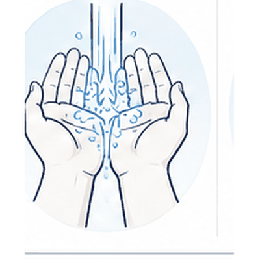
Wash the hands
Wash both hands up to the wrists.
3 times
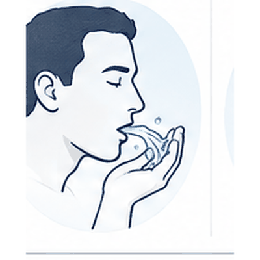
Rinse the mouth and nose
Take water into your mouth, swill it round, and spit it out. Then draw a little water into your nose with the right hand and blow it out with the left.
3 times each
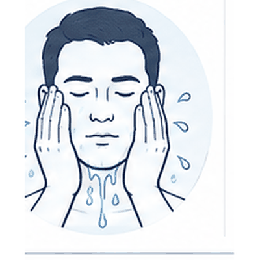
Wash the face
Wash the whole face, from the hairline to under the chin, and from ear to ear.
3 times
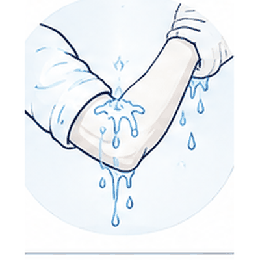
Wash the arms
Wash the right arm up to and including the elbow, then the left arm the same way.
3 times each arm
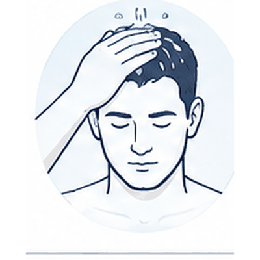
Wipe the head
With wet hands, wipe over your head once - from the front hairline to the back, and back again in one movement.
Once
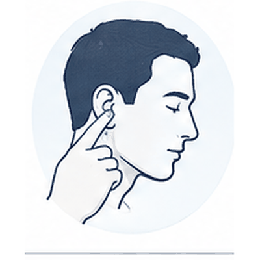
Wipe the ears
Using the same wetness, wipe the inside of both ears with your index fingers and behind them with your thumbs.
Once
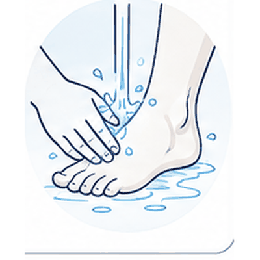
Wash the feet
Wash the right foot up to and including the ankle, getting between the toes, then the left foot the same way.
3 times each foot
Say the words after wudu
Wudu is now complete. Saying this straight after is a strong sunnah. It is short:
أَشْهَدُ أَنْ لَا إِلَٰهَ إِلَّا اللَّهُ وَحْدَهُ لَا شَرِيكَ لَهُ، وَأَشْهَدُ أَنَّ مُحَمَّدًا عَبْدُهُ وَرَسُولُهُ
Ash-hadu an laa ilaaha illallaahu wahdahu laa shareeka lah, wa ash-hadu anna Muhammadan ‘abduhu wa rasooluh.
I bear witness that there is no god worthy of worship except Allah alone, with no partner, and I bear witness that Muhammad is His servant and messenger.
Some add a second line, reported separately:
اللَّهُمَّ اجْعَلْنِي مِنَ التَّوَّابِينَ وَاجْعَلْنِي مِنَ الْمُتَطَهِّرِينَ
Allaahumma-j‘alnee minat-tawwaabeen, waj‘alnee minal-mutatahhireen.
O Allah, make me one of those who turn to You in repentance, and one of those who keep themselves pure.
What breaks wudu
Once any of these happen, you make wudu again before you pray:
- Anything that exits the private parts - urine, stool, or wind.
- Deep sleep, where you lose awareness of your surroundings.
- Losing consciousness - fainting, or being put under.
- Touching the private parts directly with the hand, with no barrier.
- Intimacy, or the release of sexual fluid. This needs a full shower (ghusl), below.
If you are not sure whether your wudu broke, treat it as still valid until you are certain it broke. Doubt does not undo it.
When you need a full shower: ghusl
Some things need a full-body wash before you can pray again: intimacy, the release of sexual fluid (including from a wet dream), and, for women, the end of the monthly period or of post-natal bleeding. It is also done after taking your shahada, and before Jumu’ah.
The simple valid way: form the intention, wash off any impurity, then let water reach every part of your body - including rinsing the mouth and nose, and the roots of the hair - from head to foot. A full wudu is included in the sunnah method, so you do not need to make a separate wudu afterwards.
Wiping over socks
If you made full wudu, then put on socks, you may wipe over the top of each foot with a wet hand instead of washing the feet each time you renew wudu - for 24 hours as a resident, or 3 days when travelling. Taking the socks off ends it, and then you wash the feet.
No water?
If there is no water, or water would harm you because of illness or a wound, you make tayammum: strike both palms lightly on clean earth, stone or dust, wipe your face, then wipe your hands. It stands in for wudu until water is available.
Do tattoos or nail polish stop wudu working?
Tattoos are under the skin and do not stop water reaching it, so they do not affect wudu. Nail polish sits on top of the nail and blocks the water, so it should be removed before wudu. Henna stains the skin but does not form a layer, so it is fine.
Can I pray straight after wudu?
Yes. As long as the prayer time has entered and nothing has broken your wudu, you can pray immediately. Many people also pray two short voluntary units after wudu.
Does going to the bathroom always mean redoing wudu?
Yes - anything passing from the front or back passage breaks wudu, so you make it again before praying.
My Arabic is not good. Does that make the wudu invalid?
No. The washing is what makes wudu valid. The words after it are a sunnah you say in Arabic, and your pronunciation sharpens with good audio and practice. Do not let it stop you praying.