New Muslims · Salah
How to pray salah, step by step
The whole prayer, from "Allaahu akbar" to "As-salaamu ‘alaykum" - every position, every word, what it means, and what to do when the number of units changes.
Learn the shape first - the order of the movements. Then add the short words. Then the longer ones. Below is a full two-unit prayer (Fajr) as the model; the rule for 3 and 4 units follows.
On this page
Before you begin
Make sure, as far as you can, that:
- The prayer’s time has entered.
- You have wudu. Learn wudu →
- Your body, clothing and the spot you pray on are clean.
- You are covered - for a man, at least from the navel to the knees, plus the shoulders; for a woman, everything except the face and hands, in loose, non-transparent clothing.
- You are facing the qiblah - the direction of the Ka’bah in Makkah. An app or a compass will set you right.
- You have made the intention in your heart for this specific prayer. No spoken words needed.
The shape of the prayer
One unit (rak’ah) runs: stand and recite, bow, stand, prostrate, sit, prostrate. Then either stand for the next unit or sit for the ending. Learn this flow with no words first.
A prayer, word by word
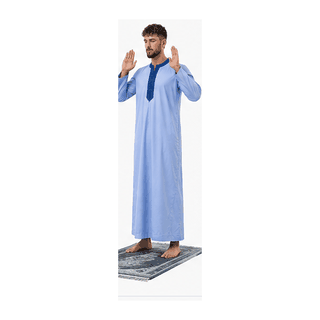
The opening takbir
Stand facing the qiblah. Raise your hands to about shoulder or ear height, palms forward, and say the takbir. Then place your right hand over your left on your chest.
اللَّهُ أَكْبَرُ
Allaahu akbar
Allah is the greatest.
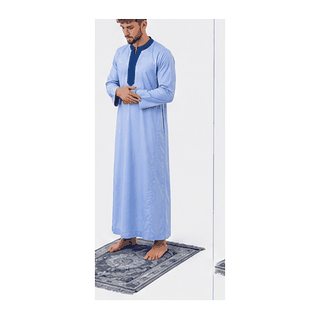
The opening words
While standing, say the opening supplication quietly, then seek refuge in Allah, then say Bismillah.
سُبْحَانَكَ اللَّهُمَّ وَبِحَمْدِكَ، وَتَبَارَكَ اسْمُكَ، وَتَعَالَىٰ جَدُّكَ، وَلَا إِلَٰهَ غَيْرُكَ
Subhaanaka-llaahumma wa bihamdika, wa tabaaraka-smuka, wa ta‘aalaa jadduka, wa laa ilaaha ghayruk.
Glory and praise be to You, O Allah. Blessed is Your name, exalted is Your majesty, and there is no god but You.
أَعُوذُ بِاللَّهِ مِنَ الشَّيْطَانِ الرَّجِيمِ
A‘oodhu billaahi minash-shaytaanir-rajeem
I seek refuge with Allah from Satan, the rejected.
Recite Al-Fatihah
Recite the opening chapter of the Qur’an. You say it in every single unit of every prayer. In Fajr, Maghrib and Isha the first two units are said aloud; the rest are said silently.
بِسْمِ اللَّهِ الرَّحْمَٰنِ الرَّحِيمِ الْحَمْدُ لِلَّهِ رَبِّ الْعَالَمِينَ الرَّحْمَٰنِ الرَّحِيمِ مَالِكِ يَوْمِ الدِّينِ إِيَّاكَ نَعْبُدُ وَإِيَّاكَ نَسْتَعِينُ اهْدِنَا الصِّرَاطَ الْمُسْتَقِيمَ صِرَاطَ الَّذِينَ أَنْعَمْتَ عَلَيْهِمْ غَيْرِ الْمَغْضُوبِ عَلَيْهِمْ وَلَا الضَّالِّينَ
Bismillaahir-rahmaanir-raheem. Al-hamdu lillaahi rabbil-‘aalameen. Ar-rahmaanir-raheem. Maaliki yawmid-deen. Iyyaaka na‘budu wa iyyaaka nasta‘een. Ihdinas-siraatal-mustaqeem. Siraatal-ladheena an‘amta ‘alayhim, ghayril-maghdoobi ‘alayhim wa lad-daalleen.
In the name of Allah, the Most Merciful, the Especially Merciful. All praise is for Allah, Lord of all worlds, the Most Merciful, the Especially Merciful, Master of the Day of Judgement. You alone we worship, and You alone we ask for help. Guide us to the straight path, the path of those You have blessed, not of those who earned anger, nor of those who went astray.
At the end, say Aameen ("O Allah, answer") - aloud after an aloud recitation, quietly otherwise.
Recite a short surah
After Al-Fatihah, in the first two units only, recite another short passage of the Qur’an that you know. Al-Ikhlas is the usual first choice - short, and central to the faith.
قُلْ هُوَ اللَّهُ أَحَدٌ اللَّهُ الصَّمَدُ لَمْ يَلِدْ وَلَمْ يُولَدْ وَلَمْ يَكُنْ لَهُ كُفُوًا أَحَدٌ
Qul huwallaahu ahad. Allaahus-samad. Lam yalid wa lam yoolad. Wa lam yakun lahu kufuwan ahad.
Say: He is Allah, One. Allah, the Eternal Refuge. He neither begets nor is born, and there is nothing comparable to Him. (Surah Al-Ikhlas)
Three more short surahs to learn early are on this page under Short surahs to memorise.
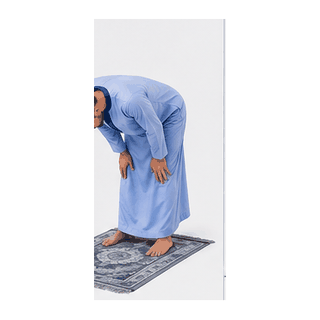
Bow (ruku)
Say Allaahu akbar and bow, back flat, hands on your knees, neck level with your back. Be still. Then say, three times:
سُبْحَانَ رَبِّيَ الْعَظِيمِ
Subhaana rabbiyal-‘azeem
Glory to my Lord, the Most Great.
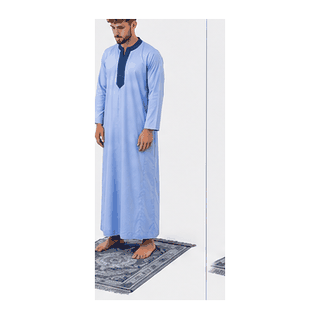
Rise from bowing
Come back up to standing fully upright. As you rise say the first line; once standing, say the second.
سَمِعَ اللَّهُ لِمَنْ حَمِدَهُ
Sami‘a-llaahu liman hamidah
Allah hears the one who praises Him.
رَبَّنَا وَلَكَ الْحَمْدُ
Rabbanaa wa laka-l-hamd
Our Lord, to You belongs all praise.
Prostrate (sujud)
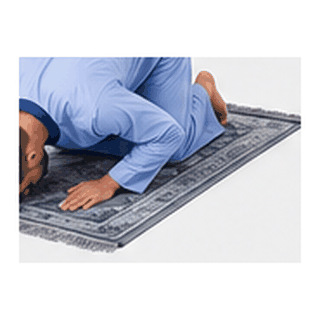
Say Allaahu akbar and go down into prostration on seven points: the forehead and nose, both palms, both knees, and the toes of both feet. Keep your forearms off the floor. Then say, three times:
سُبْحَانَ رَبِّيَ الْأَعْلَىٰ
Subhaana rabbiyal-a‘laa
Glory to my Lord, the Most High.
Sit briefly
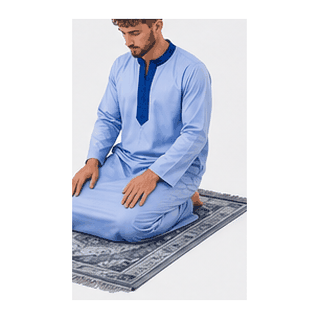
Say Allaahu akbar and sit up: on your left foot, right foot upright. Rest your hands on your thighs. Say:
رَبِّ اغْفِرْ لِي
Rabbighfir lee
My Lord, forgive me.
Prostrate a second time
Say Allaahu akbar and prostrate again, exactly like the first, saying the same words three times.
سُبْحَانَ رَبِّيَ الْأَعْلَىٰ
Subhaana rabbiyal-a‘laa
Glory to my Lord, the Most High.
The standing, the recitation, the bow, and these two prostrations together are one rak’ah (one unit). Say Allaahu akbar, stand, and pray the next unit - straight to Al-Fatihah this time, with no opening supplication and no "I seek refuge".
The final sitting
After the second prostration of the last unit, sit as before and recite the tashahhud - the testimony of faith. As you sit, raise the index finger of your right hand.
التَّحِيَّاتُ لِلَّهِ وَالصَّلَوَاتُ وَالطَّيِّبَاتُ، السَّلَامُ عَلَيْكَ أَيُّهَا النَّبِيُّ وَرَحْمَةُ اللَّهِ وَبَرَكَاتُهُ، السَّلَامُ عَلَيْنَا وَعَلَىٰ عِبَادِ اللَّهِ الصَّالِحِينَ، أَشْهَدُ أَنْ لَا إِلَٰهَ إِلَّا اللَّهُ وَأَشْهَدُ أَنَّ مُحَمَّدًا عَبْدُهُ وَرَسُولُهُ
At-tahiyyaatu lillaahi was-salawaatu wat-tayyibaat. As-salaamu ‘alayka ayyuhan-nabiyyu wa rahmatullaahi wa barakaatuh. As-salaamu ‘alaynaa wa ‘alaa ‘ibaadillaahis-saaliheen. Ash-hadu an laa ilaaha illallaah, wa ash-hadu anna Muhammadan ‘abduhu wa rasooluh.
All greetings, prayers and pure words are for Allah. Peace be upon you, O Prophet, and the mercy of Allah and His blessings. Peace be upon us and upon the righteous servants of Allah. I bear witness that there is no god but Allah, and I bear witness that Muhammad is His servant and messenger.
Then send blessings on the Prophet, peace and blessings be upon him:
اللَّهُمَّ صَلِّ عَلَىٰ مُحَمَّدٍ وَعَلَىٰ آلِ مُحَمَّدٍ، كَمَا صَلَّيْتَ عَلَىٰ إِبْرَاهِيمَ وَعَلَىٰ آلِ إِبْرَاهِيمَ، إِنَّكَ حَمِيدٌ مَجِيدٌ. اللَّهُمَّ بَارِكْ عَلَىٰ مُحَمَّدٍ وَعَلَىٰ آلِ مُحَمَّدٍ، كَمَا بَارَكْتَ عَلَىٰ إِبْرَاهِيمَ وَعَلَىٰ آلِ إِبْرَاهِيمَ، إِنَّكَ حَمِيدٌ مَجِيدٌ
Allaahumma salli ‘alaa Muhammad, wa ‘alaa aali Muhammad, kamaa sallayta ‘alaa Ibraaheem, wa ‘alaa aali Ibraaheem, innaka hameedun majeed. Allaahumma baarik ‘alaa Muhammad, wa ‘alaa aali Muhammad, kamaa baarakta ‘alaa Ibraaheem, wa ‘alaa aali Ibraaheem, innaka hameedun majeed.
O Allah, send prayers upon Muhammad and upon the family of Muhammad, as You sent prayers upon Ibrahim and the family of Ibrahim; You are Praiseworthy, Most Glorious. O Allah, send blessings upon Muhammad and upon the family of Muhammad, as You blessed Ibrahim and the family of Ibrahim; You are Praiseworthy, Most Glorious.
You may then ask Allah for anything you want, in any language, before you finish.
End the prayer
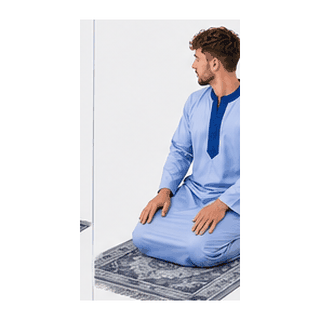
Turn your head to the right and say the salam, then to the left and say it again.
السَّلَامُ عَلَيْكُمْ وَرَحْمَةُ اللَّهِ
As-salaamu ‘alaykum wa rahmatullaah
Peace and the mercy of Allah be upon you.
When the prayer is 3 or 4 units
Fajr is 2 units, so after the second unit you go straight to the final sitting above.
Maghrib is 3 units. Dhuhr, Asr and Isha are 4. For those:
- After the second unit, sit and recite the tashahhud only (stop at "…His servant and messenger"). Do not send the blessings yet.
- Say Allaahu akbar, stand, and pray the remaining unit or units - reciting Al-Fatihah only, no extra surah.
- After the last unit’s second prostration, sit for the final sitting: the full tashahhud, the blessings on the Prophet, your own dua, then the salam.
After the prayer
The prayer is complete at the salam. It is a strong sunnah to stay seated and say:
أَسْتَغْفِرُ اللَّهَ
Astaghfirullaah
I seek Allah’s forgiveness.
اللَّهُمَّ أَنْتَ السَّلَامُ وَمِنْكَ السَّلَامُ، تَبَارَكْتَ يَا ذَا الْجَلَالِ وَالْإِكْرَامِ
Allaahumma antas-salaam, wa minkas-salaam, tabaarakta yaa dhal-jalaali wal-ikraam.
O Allah, You are Peace, and from You comes peace. Blessed are You, Owner of majesty and honour.
Then, counting on your fingers:
| سُبْحَانَ اللَّهِ Subhaanallaah - Glory be to Allah | 33 |
| الْحَمْدُ لِلَّهِ Alhamdulillaah - All praise is for Allah | 33 |
| اللَّهُ أَكْبَرُ Allaahu akbar - Allah is the greatest | 34 |
Many also recite Ayat al-Kursi (Qur’an 2:255) and the three short surahs Al-Ikhlas, Al-Falaq and An-Nas after the prayer. Then make your own dua, and pray any voluntary units for that prayer.
Witr - the odd prayer after Isha
Close the night with Witr - an odd number of units, most commonly three. In the last unit, after Al-Fatihah and a short surah, many raise their hands and make the qunut dua before bowing:
اللَّهُمَّ اهْدِنِي فِيمَنْ هَدَيْتَ، وَعَافِنِي فِيمَنْ عَافَيْتَ، وَتَوَلَّنِي فِيمَنْ تَوَلَّيْتَ، وَبَارِكْ لِي فِيمَا أَعْطَيْتَ، وَقِنِي شَرَّ مَا قَضَيْتَ
Allaahumma-hdinee feeman hadayt, wa ‘aafinee feeman ‘aafayt, wa tawallanee feeman tawallayt, wa baarik lee feemaa a‘tayt, wa qinee sharra maa qadayt.
O Allah, guide me among those You have guided, pardon me among those You have pardoned, take me into Your care among those You have taken into Your care, bless me in what You have given, and protect me from the evil of what You have decreed.
If you make a mistake
If you forget a step, add one, or lose count of the units: before or just after the salam, say Allaahu akbar, make two extra prostrations (saying Subhaana rabbiyal-a‘laa), sit, and give the salam. This covers small errors. Leaving out Al-Fatihah or a prostration means that unit is prayed again.
While you are still learning, do not panic over mistakes. Correct what you can, finish the prayer, and ask Allah to make you steady.
Short surahs to memorise
Any of these can be recited after Al-Fatihah in the first two units. Learn Al-Ikhlas first.
قُلْ هُوَ اللَّهُ أَحَدٌ اللَّهُ الصَّمَدُ لَمْ يَلِدْ وَلَمْ يُولَدْ وَلَمْ يَكُنْ لَهُ كُفُوًا أَحَدٌ
Qul huwallaahu ahad. Allaahus-samad. Lam yalid wa lam yoolad. Wa lam yakun lahu kufuwan ahad.
Say: He is Allah, One. Allah, the Eternal Refuge. He neither begets nor is born, and there is nothing comparable to Him. (Al-Ikhlas, 112)
قُلْ أَعُوذُ بِرَبِّ الْفَلَقِ مِنْ شَرِّ مَا خَلَقَ وَمِنْ شَرِّ غَاسِقٍ إِذَا وَقَبَ وَمِنْ شَرِّ النَّفَّاثَاتِ فِي الْعُقَدِ وَمِنْ شَرِّ حَاسِدٍ إِذَا حَسَدَ
Qul a‘oodhu birabbil-falaq. Min sharri maa khalaq. Wa min sharri ghaasiqin idhaa waqab. Wa min sharrin-naffaathaati fil-‘uqad. Wa min sharri haasidin idhaa hasad.
Say: I seek refuge with the Lord of daybreak, from the evil of what He created, from the evil of darkness when it settles, from the evil of those who blow on knots, and from the evil of an envier when he envies. (Al-Falaq, 113)
قُلْ أَعُوذُ بِرَبِّ النَّاسِ مَلِكِ النَّاسِ إِلَٰهِ النَّاسِ مِنْ شَرِّ الْوَسْوَاسِ الْخَنَّاسِ الَّذِي يُوَسْوِسُ فِي صُدُورِ النَّاسِ مِنَ الْجِنَّةِ وَالنَّاسِ
Qul a‘oodhu birabbin-naas. Malikin-naas. Ilaahin-naas. Min sharril-waswaasil-khannaas. Alladhee yuwaswisu fee sudoorin-naas. Minal-jinnati wan-naas.
Say: I seek refuge with the Lord of mankind, the King of mankind, the God of mankind, from the evil of the retreating whisperer who whispers in the hearts of mankind, from among the jinn and mankind. (An-Nas, 114)
إِنَّا أَعْطَيْنَاكَ الْكَوْثَرَ فَصَلِّ لِرَبِّكَ وَانْحَرْ إِنَّ شَانِئَكَ هُوَ الْأَبْتَرُ
Innaa a‘taynaakal-kawthar. Fasalli lirabbika wanhar. Inna shaani’aka huwal-abtar.
Indeed, We have granted you al-Kawthar. So pray to your Lord and sacrifice. Indeed, it is your enemy who is cut off. (Al-Kawthar, 108)
What if I do not know the Arabic yet?
You read it. Keep the cheat sheet in front of you - Arabic, then the transliteration, then the meaning - and read straight off it for every one of your five daily prayers. Reading the same lines dozens of times a week is how they get memorised. Having it memorised is the goal, and you get there by reading it every time until you no longer need to.
Can I read the prayer from my phone?
Yes. If you have not memorised it, you should be reading it - off your phone or a printed sheet on the mat - rather than guessing or leaving parts out. The one time you do not read is when you are praying behind an imam: then you follow his lead and move with the congregation. Aim to have your five daily prayers memorised, and get there by reading them every time until you do.
What if I miss a prayer?
Pray it the moment you remember or are free, exactly as you would have prayed it on time, then get back on schedule. A missed prayer is made up (qada), never written off. Missing one on purpose is a serious sin. But if you have fallen behind, do not let shame keep you away - start praying now, make up what you can, and turn back to Allah. He does not turn away someone who returns.
Do I have to pray in a mosque?
No. You can pray almost anywhere clean. For men, praying the obligatory prayers in congregation at the mosque carries great reward and is strongly encouraged, especially Fajr and Isha.
How do I fit five prayers around a full work day?
Most of them already fit. Fajr is before work. Maghrib and Isha are after it. That leaves Dhuhr and Asr, and both have wide windows - a few minutes on a break covers it. If a shift genuinely traps you, pray Dhuhr and Asr the moment you are free and do not let that become the norm. Five is obligatory. You build the day around them.